
Decode and capture
Load WAV, FLAC, or MP3, capture a live device, or read the audio track from a video into an explicit Float32 contract.

Audio
Decode, capture, process, analyze, play, and encode audio through the same matrix runtime that powers OA machine learning.
Pipeline
Load WAV, FLAC, or MP3, capture a live device, or read the audio track from a video into an explicit Float32 contract.
Mix, normalize, resample, saturate, and filter with block-parallel Biquad and 1–64-section SOS processing on the GPU.
STFT, mel spectrograms, and MFCCs produce ordinary Matrix values ready for the Ml stack.

Play, seek, loop, or encode through the same stream contract used by Vision for synchronized media.
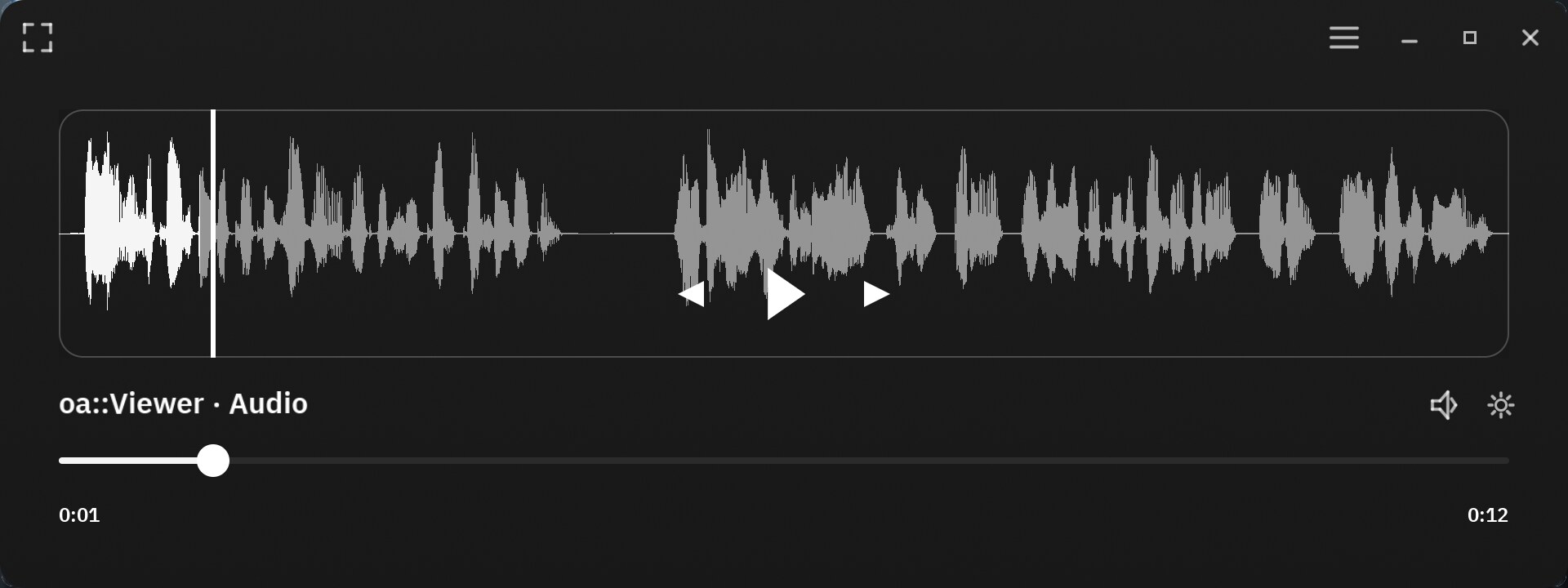
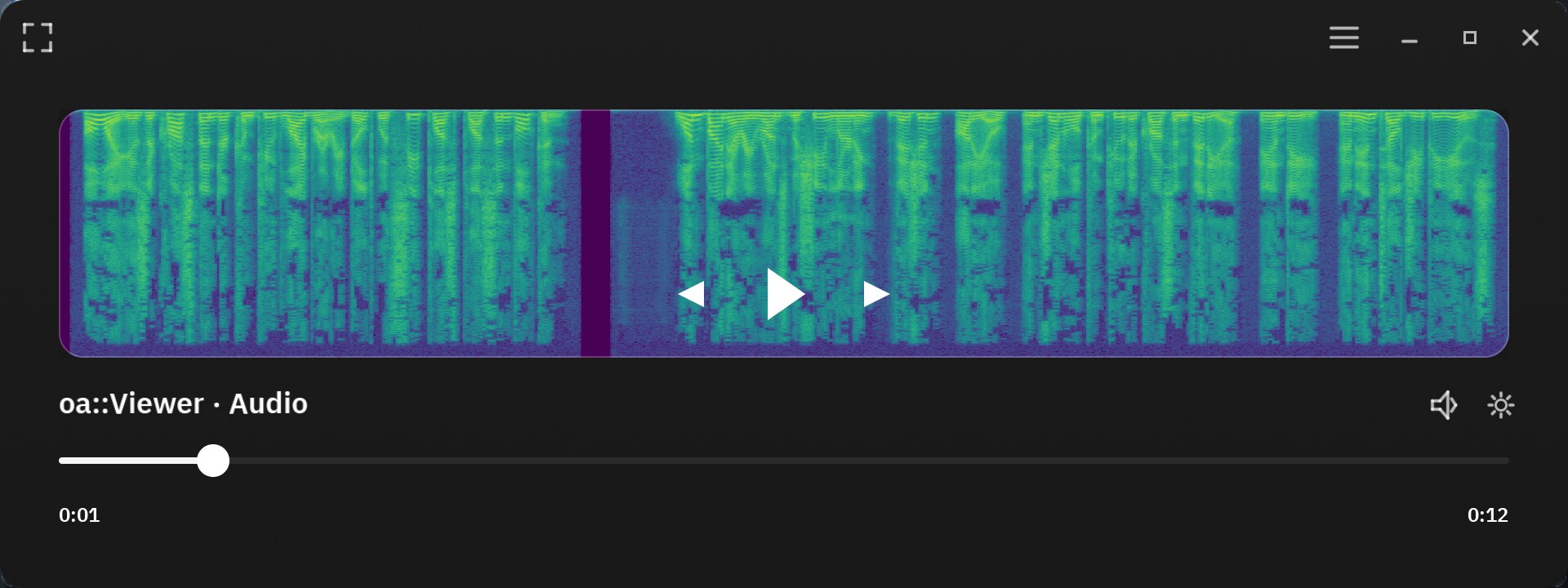
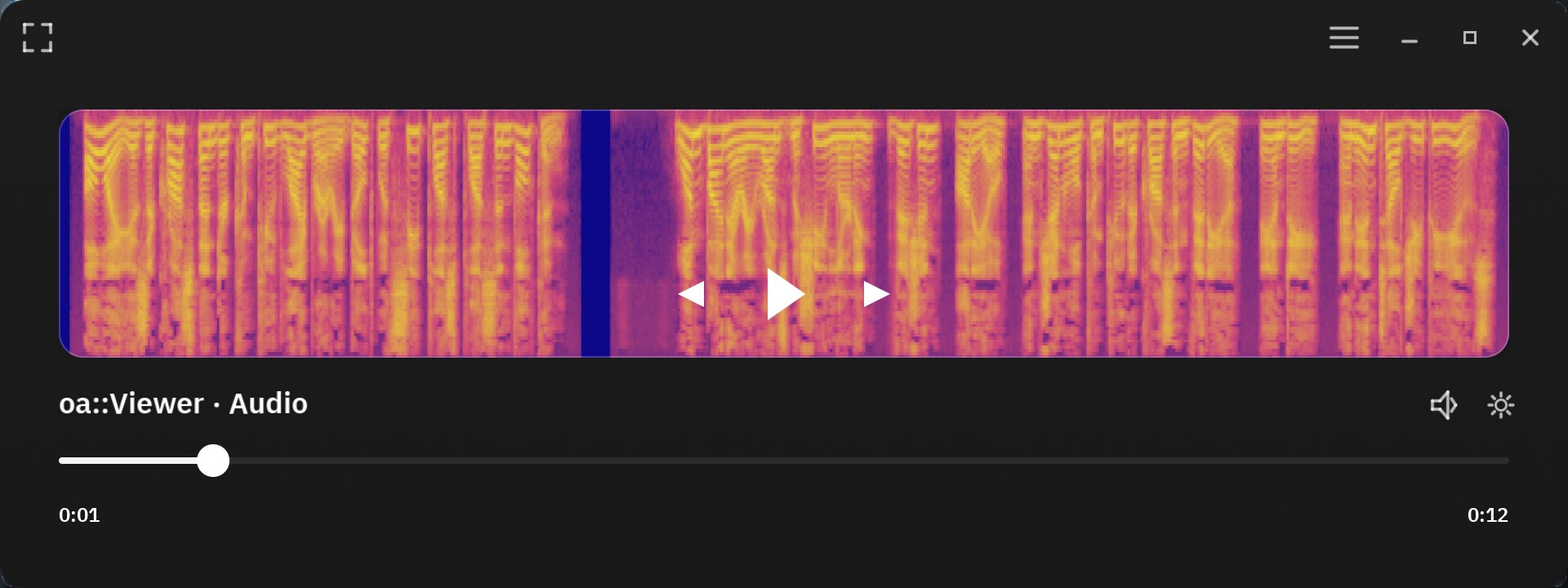
OA Viewer
Waveforms, spectra, and mel features are real OA values rendered for inspection. The same explicit data contract can move from ingest through GPU processing to a model or a human-readable diagnostic without an export detour.
Capabilities
Decode, transform, synchronize, and deliver without breaking the data model between media, compute, and machine learning.
For Developers · Audio SDK
A condensed view of the SDK pipeline: decode, collapse to mono, normalize, fade, reverberate, and save. Rust and Python follow the same sequence through the native OA runtime.
1use oa::{Engine, Path, audio};23let engine = Engine::new()?;4let path = Path::asset_rel("audio/oaNarration.wav");5let source = audio::decode_file(&engine, &path)?;6let mono = audio::to_mono(&source)?;7let normalized = audio::normalize(&mono, audio::NormalizeAudioConfig {8 target_db: -3.0, ..Default::default()9})?;10let faded = audio::fade(&normalized, 2400, 2400)?;11let room = audio::reverb(&faded, 1.5, 0.4)?;12audio::save_wav_f32(&Path::var_rel("audio/room.wav"), &room)?;
Oa Library
Follow the same Engine, values, and explicit execution contract into another module.